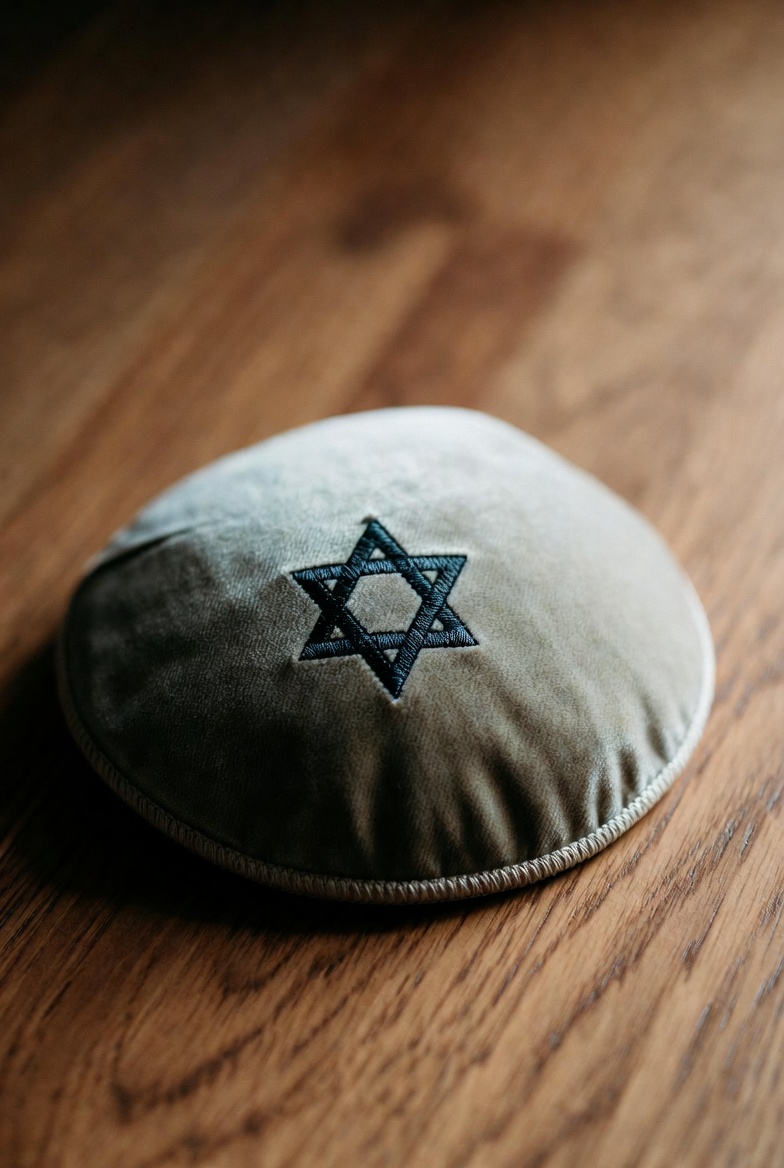
1. Introduction: The Strategic Intersection of Faith and Brand Equity
In the sophisticated arena of corporate marketing and large-scale event coordination, the selection of promotional merchandise has transcended the utilitarian distribution of pens and tote bags. Today, the focus has shifted decisively toward “high-retention” assets—items that possess intrinsic cultural, aesthetic, or sentimental value, ensuring they remain in the recipient’s possession long after the event concludes. Within the specific vertical of Jewish life cycle events (Simchas), corporate galas, and organizational milestones, the Kippah (or Yarmulke) represents a unique convergence of religious tradition and brand signaling. It is not merely a head covering; it is a ritual object that serves as a canvas for identity.
For the corporate buyer, the procurement of branded Kippahs presents a complex challenge that is distinct from standard merchandise acquisition. Unlike a t-shirt or a coffee mug, the Kippah is a three-dimensional, architectural garment constructed from specialized textiles—velvet, satin, linen, or silk—that react differently to various decoration methods. The core problem facing B2B buyers is the degradation of logo quality when digital assets are translated into these physical mediums without sufficient technical foresight. A logo that looks pristine on a PDF proof can look distorted, puckered, or illegible when embroidered onto the convex curve of a velvet dome.
The stakes for quality are quantifiable. According to extensive research by the Promotional Products Association International (PPAI), the correlation between product quality and brand perception is absolute. Statistics indicate that 72% of consumers believe the quality of a promotional product directly reflects the reputation of the company distributing it.1 Furthermore, the retention value of such items is exceptionally high, with 87% of recipients keeping promotional products for more than a year if they are deemed useful or high-quality.2 A well-constructed Kippah enters the recipient’s permanent rotation of ritual wear, appearing at synagogues, weddings, and holiday tables for years, generating thousands of impressions. Conversely, a poorly constructed item—characterized by peeling foil, fraying edges, or illegible embroidery—is discarded or relegated to the communal “bin,” severing the brand connection.
This report serves as an exhaustive technical manual for the corporate buyer. It moves beyond the superficial selection of colors and fonts to explore the material science of base fabrics, the engineering limits of embroidery digitization, the chemistry of lining prints, and the structural integrity of edge finishing. By understanding the physics of the “floating method” for velvet embroidery or the “pull compensation” required for satin, corporate buyers can navigate the manufacturing process with the authority of a textile engineer, ensuring the final deliverable enhances rather than diminishes their brand equity.
2. Material Science: The Physics of the Substrate
The foundation of any customization project is the substrate itself. In the context of Kippah manufacturing, the “fabric” is not just a surface for color; it is a structural component that determines the viability of specific branding technologies. Corporate buyers must match their aesthetic goals with the physical properties of the material, understanding that the interaction between the fabric’s weave, pile, and elasticity will dictate the clarity of their logo.
2.1 Deluxe Satin: The Standard of Clarity
For decades, “Deluxe Satin” has served as the baseline for commemorative and corporate Kippahs. Technically, this fabric is typically a high-density polyester weave designed to mimic the luster of silk while providing superior durability and stain resistance.3 From a manufacturing perspective, satin offers the most predictable surface for customization, making it the safest choice for complex logos.
The primary advantage of satin lies in its surface tension and lack of texture. Unlike natural fibers that may have slubs or irregularities, deluxe satin presents a smooth, uniform topography. This allows for extremely precise registration in Screen Printing and Hot Foil Stamping. The ink or foil can sit perfectly flat on the surface without being broken up by the weave, ensuring that fine text and intricate logo details remain sharp. Furthermore, the polyester content provides high heat resistance, allowing plastisol inks to be cured at necessary temperatures (typically around 320°F) without shrinking the panels, a common risk with natural fibers.
However, satin is not without its technical risks. The same smoothness that aids printing can be a liability in Direct Embroidery. Satin is a slippery, unstable fabric under the needle. If a logo is digitized with high stitch density (a large number of needle penetrations in a small area), the fabric can pull inward, causing “puckering” around the design. This creates unsightly ripples that distort the dome shape of the Kippah. To mitigate this, manufacturers must use a sturdy “cut-away” stabilizer on the underside and adjust the “pull compensation” in the embroidery file—literally programming the machine to stitch slightly wider than the design to account for the fabric contracting.4
2.2 Velvet: The Challenge of the Pile
Velvet is frequently the preferred material for formal, Orthodox, and executive-level events due to its rich hand-feel and light-absorbing depth, which imparts a sense of gravity and luxury.3 However, velvet represents the most difficult substrate for customization, presenting a “minefield” of potential quality failures for the uninitiated buyer.
The defining characteristic of velvet is its “pile”—thousands of cut threads standing vertically from the base weave. This three-dimensional structure creates three distinct problems for branding:
- Hoop Burn (Crushing): Traditional embroidery requires the fabric to be clamped tightly between an inner and outer hoop to create tension. On velvet, this pressure crushes the pile, creating a permanent, shiny ring around the logo known as “hoop burn.” This damage is irreversible; steaming may lift the pile slightly, but the mark usually remains.5
- Stitch Sinking: When embroidery stitches are applied to velvet, they tend to sink deep into the plush pile rather than sitting on top. This can cause text to disappear or look thin and ragged. A 4mm letter might be legible on satin but completely swallowed by the nap of velvet.7
- Nap Directionality: Velvet has a “grain” or nap. When brushed in one direction, it looks dark and rich; in the other, it looks lighter and shiny. If the factory cuts the four or six panels of the Kippah without respecting this directionality, the finished product will look patchwork, with some panels appearing darker than others due to light refraction.
To successfully brand velvet, the factory must employ specific advanced techniques. The “Floating Method” is non-negotiable. Instead of hooping the velvet, the operator hoops a stabilizer backing and sprays it with a temporary adhesive. The velvet is then gently laid (floated) on top, securing it without any crushing pressure from the hoop ring.7 Additionally, a Water-Soluble Topping (such as Sulky Solvy) must be placed over the velvet before stitching. This thin layer of plastic film holds the stitches up, preventing them from sinking into the pile. Once the stitching is complete, the topping is torn away or dissolved with a light mist of water, leaving the logo floating crisply atop the velvet.8
2.3 Linen and Textured Weaves: The Modern Aesthetic
In recent years, there has been a significant aesthetic shift toward “rustic” or “organic” textures, driven by the Modern Orthodox community and eco-conscious corporate branding trends. Fabrics like Belgian Linen, Burlap, and Raw Silk are in high demand for their contemporary, matte finish.3
While aesthetically pleasing, these fabrics possess coarse, open weaves that present a resolution challenge. A logo that relies on fine lines or serif text can be compromised by the texture of the fabric itself. If a needle drops into a “valley” between two thick linen threads, the line of the logo may appear jagged or broken. This is particularly problematic for corporate logos with taglines (e.g., “Financial Services Group” in 6pt font).
For linen, the customization strategy must shift. Direct embroidery requires a heavy Underlay—a grid of running stitches sewn first to create a smooth “foundation” or “raft” over the rough fabric. The visible satin stitches are then sewn on top of this underlay. Without this foundational step, the logo will look uneven. Alternatively, corporate buyers should consider Woven Labels (discussed in Chapter 2) for linen Kippahs, as the patch provides its own smooth surface, bypassing the texture issue entirely.
2.4 Fabric Technical Comparison Table
The following table summarizes the technical suitability of common Kippah fabrics for various branding applications, derived from industry data on textile performance.3
| Fabric Type | Texture Profile | Best Branding Method | Technical Risks | Corporate Application |
| Deluxe Satin | Smooth, High Sheen | Screen Print, Foil Stamp, Embroidery | Puckering with high density; Foil flaking if low quality | Large-scale giveaways, Weddings, Bar Mitzvahs |
| Plush Velvet | Deep Pile, Soft | Embroidery (with topping) | Hoop burn; Stitch sinking; Nap direction errors | Executive gifts, Formal Galas, Orthodox events |
| Linen / Cotton | Coarse Weave, Matte | Woven Label, Screen Print | Small text lost in weave; Fraying edges | Eco-friendly brands, Modern/Casual events |
| Raw Silk | Irregular Slubs, Sheen | Embroidery (Light density) | Snags easily; Slippery in production | High-end boutique events |
| Suede (Synthetic) | Uniform, Matte Nap | Embossing, Foil Stamp | Heat sensitivity (melting); low breathability | Modern, durable branding; Sports themes |
3. The Engineering of the Logo: Embroidery vs. Alternative Technologies
For the B2B buyer, the “moment of truth” arrives when the physical sample is unboxed. Does the logo look like the PDF? The answer depends largely on the choice between direct embroidery, woven appliqué, and printing. Each technology has hard physical limits regarding resolution, color, and stability.
3.1 Direct Embroidery: The Premium Standard
Direct embroidery is widely regarded as the gold standard for branded Kippahs. The tactile, three-dimensional nature of thread creates a perception of high value and permanence that flat printing cannot match.10 However, embroidery is an analog process constrained by the physics of thread and needle.
3.1.1 The Resolution Limit and Thread Physics
Unlike digital printing, which can achieve resolutions of 300-600 DPI (Dots Per Inch), embroidery resolution is determined by the physical thickness of the thread. The industry standard is 40-weight rayon or polyester thread. With this thread thickness, the absolute minimum legible text height is generally accepted to be 0.20 to 0.25 inches (approximately 5-6mm).12
When a corporate buyer requests a logo with text smaller than 4mm, physics intervenes. The needle penetrations required to form the letters are so close together that they can shred the fabric, creating a hole rather than a letter. Furthermore, the “loops” of the thread create a natural blur radius. The holes inside letters like “a” or “e” will close up, turning the text into illegible blobs.15
The “60-Weight” Solution: For corporate logos that mandate fine detail (e.g., a crest or a tagline), the buyer must explicitly specify the use of 60-weight thread. This thread is 25% thinner than the standard 40-weight. Its use requires the factory to switch to a smaller needle (size 65/9 or 70/10) to maintain precision.16 While this increases clarity, it slows down the production speed and increases the risk of thread breaks, often incurring a surcharge. It is the only viable method for embroidering detailed taglines directly onto a Kippah.
3.1.2 The “Dome” Factor: Digitizing for Convex Surfaces
A Kippah is not a flat t-shirt; it is a dome. Embroidering on a curved surface introduces geometric distortion. As the machine moves from the center of the panel toward the edges, the fabric curvature changes.
- Registration Shift: If the logo is large, the fabric may shift under the needle, causing the outline to become misaligned with the fill (a registration error).
- Center-Out Sequencing: To prevent this, professional digitizers use a “Center-Out” sequencing strategy. The design is stitched starting from the center of the dome and moving outward toward the rim. This pushes any loose fabric away from the design rather than trapping a bubble of fabric in the middle.18
- Pull Compensation: Because the curved fabric is under tension, stitches running parallel to the curve will pull tight and appear narrower. The digitizer must add “pull compensation,” programming the stitches to be slightly wider than the artwork suggests, so that when they tighten on the dome, they retract to the correct visual width.4
3.1.3 3D Puff Embroidery
For a modern, impact-heavy look, B2B buyers often request 3D Puff embroidery, common in sports branding. This involves placing a sheet of foam (usually 2mm or 3mm thick) over the fabric. The needle perforates the foam, and the satin stitches encapsulate it, slicing the foam at the edges to leave a raised, relief effect.
- Limitations: This technique is strictly limited to bold, blocky designs. It cannot accommodate serifs, fine lines, or complex details. The column of stitching must be wide enough to cover the foam completely; narrow columns will fail to cut the foam or leave it exposed (a defect known as “peeking”).4
3.2 Woven Appliqué: The High-Definition Alternative
When a corporate logo is too complex for embroidery—containing gradients, microscopic text, or intricate heraldry—the Woven Label (or Patch) is the superior technical solution. Buyers often confuse woven patches with embroidered patches, but the manufacturing process is fundamentally different.
- Loom vs. Stitch: Embroidered patches are stitched onto a backing fabric. Woven patches are created on a loom, weaving the design into the fabric structure itself using warp and weft threads.
- The Resolution Advantage: Because weaving uses much finer threads and packs them tighter than embroidery, woven patches can achieve photo-realistic detail and legible text down to 2mm height. They provide a smooth, flat finish that captures crisp lines and complex geometries that would be impossible to stitch.10
- Gradient Simulation: Woven technology allows for the mixing of colored threads in the weave to simulate smooth gradients and shading, a visual effect that standard embroidery (which uses solid blocks of color) cannot replicate effectively.10
- Application: For Kippahs, the woven patch is typically die-cut to the shape of the logo and then heat-sealed or appliquéd (sewn) onto the panel. This is often the preferred method for tech companies with intricate, multi-colored logos.
3.3 Printing: Screen vs. Heat Transfer
While less common for high-end Kippahs, printing offers specific advantages for bulk orders or budget constraints.
- Screen Printing: This involves pushing ink through a mesh stencil directly onto the fabric.
- Durability: On natural fibers like cotton and linen, screen printing is highly durable because the ink penetrates and bonds with the fibers.20
- Limitations: It is difficult to screen print over the seams of a finished Kippah. Therefore, screen printing is best done on the panels before the Kippah is sewn together (cut-and-sew). This requires a higher minimum order quantity (MOQ) but yields a professional, integrated look.
- Heat Transfer (DTF/HTV): A digital design is printed onto a carrier sheet and heat-pressed onto the Kippah.
- The “Sticker” Effect: While this allows for full-color photographs and gradients, the result sits on top of the fabric like a decal. It creates a plasticized feel that reduces breathability. Furthermore, heat transfers are vulnerable to peeling over time, especially if exposed to heat (e.g., left in a hot car) or dry cleaning chemicals.21 For a religious item meant to be worn, the tactile experience of a heat transfer is often perceived as “cheap” or temporary compared to the permanence of embroidery.
3.4 Technology Selection Matrix
| Feature | Direct Embroidery | Woven Patch | Screen Print | Heat Transfer (DTF) |
| Minimum Text Size | ~5mm (0.2″) | ~2mm (0.08″) | ~3mm (0.12″) | ~1mm (0.04″) |
| Gradients | No (Block color only) | Yes (Simulated) | Yes (Halftones) | Yes (Photo-real) |
| Texture/Feel | 3D, Tactile, Premium | Smooth, Flat | Integrated (Soft) | Plastic/Vinyl feel |
| Durability | Permanent | Permanent | High (on cotton) | Moderate (Peels over time) |
| Cost | High (Stitch count dependent) | Low (in bulk) | Moderate (Color count dependent) | Low |
4. The Interior Architecture: Lining and Simcha Text
While the exterior of the Kippah carries the corporate brand, the interior is the “functional” information hub. It typically bears the “Simcha” text—the name of the event, date, and location. This area faces unique physical stresses: direct contact with the scalp, hair products, perspiration, and friction.
4.1 Lining Chemistry and Sweat Resistance
A critical, often overlooked specification in B2B procurement is the Colorfastness to Perspiration of the lining fabric. The lining is usually a simple cotton twill or polyester. However, the environment inside a Kippah is hostile. The human scalp generates heat and perspiration, which is chemically complex (containing salts, lactic acid, and urea).
- The Bleed Risk: If the lining is dyed with low-quality dyestuffs, the acidity of perspiration (pH 4.3 – 7.0) can cause the dye to migrate (bleed). This can result in staining of the wearer’s forehead or hair—a catastrophic failure for a corporate gift.23
- Testing Standards: High-quality manufacturers subject their lining fabrics to ISO 105-E04 or AATCC 15 testing standards. This involves soaking the fabric in an artificial sweat solution (containing histidine) and subjecting it to pressure and heat. A passing grade (4 or 5 on the gray scale) ensures the dye is stable.24
- Buyer Recommendation: To mitigate risk, corporate buyers should specify White or Light Grey Cotton Twill linings. These lack the heavy pigment loads of black or navy linings, significantly reducing the risk of bleeding while providing a high-contrast background for the interior text.26
4.2 Interior Printing Technologies
There are two primary methods for printing the commemorative text on the lining: Hot Foil Stamping and Silk Screen Printing.
4.2.1 Hot Foil Stamping
This is the traditional method for Jewish lifecycle events. A metal die is heated, and a layer of metallic foil (Gold, Silver, or Blue) is pressed onto the lining.
- Aesthetics: The metallic shine communicates “celebration” and tradition. It looks premium and formal.27
- Durability Failure: Foil stamping relies on a heat-activated adhesive. On slick lining fabrics like polyester satin, or under the friction of hair, this adhesive can fail. The foil can crack and flake off over time, leaving the text illegible. It is essentially a surface application that does not bond with the fibers.
4.2.2 Silk Screen Printing (Ink)
- Mechanics: Liquid ink is pushed through a screen and cured into the fabric.
- Durability: Ink penetrates the fibers of the cotton twill. It is inherently resistant to abrasion, heat, and moisture. It will not flake or peel.27
- B2B Verdict: For corporate events where longevity is key—and where the Kippah is intended to be a lasting brand reminder—Silk Screen Printing in a dark color (Navy, Black, Charcoal) is the technically superior choice. While it lacks the metallic “bling” of foil, its permanence ensures the event details remain legible for the life of the object.
5. Structural Integrity: Rims, Piping, and Edge Finishing
The rim of the Kippah is its structural skeleton. It defines the dome shape and prevents the layers from separating. A cheap Kippah often reveals itself at the rim, where the stitching may be uneven or the piping flaccid.
5.1 Piping Materials: Leather vs. Cord
Piping is the decorative tubular border that runs along the edge of the Kippah. It is formed by wrapping a core material in a strip of fabric or leather.
- Cord Piping: The most basic form uses a polyester or cotton cord as the core. While soft, it lacks structural rigidity. Over time, a Kippah with cord piping may flatten out or become misshapen.28
- Leather Piping: High-end “Executive” Kippahs use a core wrapped in genuine leather. The stiffness of the leather acts like a wire frame, maintaining the architectural dome shape of the Kippah even when it is not being worn. This structural rigidity is a key differentiator in quality perception.29
- Design Strategy: Leather piping also offers a sophisticated way to introduce corporate colors. A charcoal grey velvet Kippah with a Navy Blue Leather rim creates a subtle, two-tone branding effect that is elegant rather than ostentatious.30
5.2 Edge Finishing Techniques
How the raw edges of the fabric are handled at the rim is a major indicator of manufacturing quality.
- Serged (Overlock) Edge: This is the most economical finish. The raw edges are stitched over with a thread loop (serger). This is visible and looks industrial. It is common on mass-market, budget Kippahs but is generally considered unacceptable for high-end corporate gifting.31
- Bias Binding (Taped Edge): A strip of fabric cut on the “bias” (45-degree angle to the grain) is wrapped around the raw edge and sewn down. This creates a clean, smooth border that encases all raw threads. It is the standard finish for Linen and Cotton Kippahs, providing a neat, tailored look.33
5.3 Stitching Styles: Blind vs. Top
The visibility of the stitch holding the rim is a stylistic choice with implications for formality.
- Top Stitch: A visible line of straight stitching runs parallel to the rim, usually about 3-5mm from the edge. This is a strong, durable stitch, but it breaks the visual continuity of the fabric. It gives the Kippah a “sporty” or casual appearance.35
- Blind Stitch: This is a specialized hem where the needle catches only a few threads of the inner side of the outer fabric, making the stitch invisible from the exterior. A Blind Stitched rim allows the fabric to roll seamlessly over the edge, creating a clean, uninterrupted finish. This technique requires specialized machinery (blind hemmer) or hand-finishing and is the hallmark of a luxury, formal Kippah.36
6. Digital Pre-Production: The Vector Imperative
The most common point of failure in branded merchandise occurs before a single stitch is sewn: the submission of poor-quality artwork. To ensure the factory produces a “perfect” result, the client must provide data that the industrial machines can interpret without interpolation errors.
6.1 The Vector vs. Raster Divide
Clients often submit logos in JPEG or PNG formats. These are Raster images, composed of a fixed grid of colored pixels.
- The Problem: When a raster image is scaled up or down, the software must “guess” (interpolate) the new pixels, leading to blurriness. When an embroidery digitizer tries to convert a blurry pixelated edge into stitches, the machine interprets the blur as “noise,” resulting in jagged, sloppy stitching.38
- The Solution: Corporate buyers must supply Vector files (.AI,.EPS,.SVG). Vector graphics are resolution-independent; they use mathematical formulas (Bézier curves) to define lines and shapes. A vector file tells the embroidery machine, “Draw a perfect curve from Point A to Point B,” rather than “Fill these pixels.” This ensures razor-sharp lines and perfect scaling, regardless of the Kippah size.40
6.2 Embroidery File Architecture
Understanding the file types used in production empowers the buyer to retain control over their assets.
- .DST (Tajima): This is the industry-standard “machine code.” A DST file is purely coordinate data (X/Y axis movements for the needle). Crucially, DST files do not contain color information. The machine operator manually assigns colors to the needles based on a run sheet. DST files are “dumb”—they cannot be easily resized or edited without degrading the quality.41
- .EMB (Wilcom): This is the “master” or “native” file format used by digitizers. An EMB file contains “object data”—it knows that a certain shape is a circle filled with a Tatami stitch at 0.4mm density.
- Best Practice: When paying a setup fee for digitization, the corporate buyer should contractually require the delivery of the .EMB file. This allows the brand to own the source code of their embroidery, enabling future edits (e.g., resizing the logo for a different item) without paying for re-digitization.43
6.3 The Hebrew Typography Challenge
For organizations branding Kippahs with Hebrew text (e.g., specific event names or biblical verses), the digital workflow is fraught with software bugs.
- Directionality (RTL): Most western design software defaults to Left-to-Right text flow. Hebrew is Right-to-Left (RTL). If the designer or the digitizing software is not configured correctly, the letters can be reversed or the spacing can be inverted.44
- Nikkud (Vowel) Displacement: The small dots and lines (Nikkud) that appear above, below, or inside Hebrew letters present a specific embroidery challenge. In standard fonts, these are often treated as diacritics attached to the letter. In embroidery, if the Nikkud is stitched too close to the letter, the “pull” of the thread will cause them to merge into a single, illegible blob.
- The Fix: Professional digitizers must manually separate the Nikkud from the letters in the embroidery software, moving them 0.5mm to 1mm away from the base character. This manual “kerning” ensures that when the fabric pulls tight during stitching, the vowel remains distinct and legible.45
7. Corporate Etiquette, Case Studies, and Inclusivity
Beyond the technical specifications, the successful deployment of branded Kippahs requires a nuanced understanding of cultural etiquette and inclusivity.
7.1 The “Halo Effect” of Quality
The data regarding promotional products suggests a psychological transfer of value. If 72% of people equate the quality of a promo item with the reputation of the company 1, then a cheap Kippah damages the brand.
- Case Study: The Peeling Foil: Consider a corporate sponsor at a conference who distributes satin Kippahs with heat-transfer logos and foil-stamped linings. By the end of the evening, friction and sweat cause the foil to flake and the transfer to peel. The item looks shabby, and the brand appears “cheap.”
- The Alternative: A linen Kippah with a woven label logo and silk-screened lining remains pristine. It is taken home, worn to services, and becomes a silent ambassador for the brand’s commitment to quality.
7.2 Subtlety in Religious Swag
Branding a religious object requires a delicate touch. “Loud” or aggressive branding on a Kippah is often considered disrespectful or gauche.
- Placement Strategy: The most respectful placement for a corporate logo is often on the interior lining or as a small, tone-on-tone embroidery on the rim. Avoiding a large “billboard-style” logo on the center panel allows the guest to wear the Kippah comfortably in a house of worship without feeling like a walking advertisement.47
- Color Palette: Utilizing corporate colors for the fabric and piping—while keeping the embroidery neutral (Silver, Gold, or White)—is a sophisticated way to signal brand identity. For example, a tech company with a blue and orange logo might produce a Navy Kippah with Orange leather piping and a subtle silver embroidery.
7.3 Inclusivity and Diversity
When sourcing Kippahs for diverse corporate events, buyers must consider the broad spectrum of potential wearers.
- Denominational Neutrality: Fabrics like Satin and Linen are generally accepted across all Jewish denominations (Orthodox, Conservative, Reform). Velvet is strongly coded as Orthodox. A buyer seeking broad appeal should opt for the more neutral fabrics.9
- Gender and Sizing: While traditionally male, Kippahs are worn by women in Reform, Conservative, and Reconstructionist movements.
- The Size Issue: Standard “bulk” Kippahs are often a Size 5 (approx. 15-16cm diameter). This can be too large for children or women with smaller head sizes. A truly inclusive order might include a percentage of Size 4 Kippahs or specific “wire” clips that allow the Kippah to be secured to different hair types.48
8. Conclusion: The Blueprint for the Perfect Order
The difference between a box of “swag” and a shipment of heirlooms lies in the details. To execute a flawless order of branded Kippahs, the corporate buyer must transition from a passive purchaser to an active technical lead.
By synthesizing the material science, engineering constraints, and cultural contexts discussed in this report, we can construct a checklist for the “Perfect Corporate Kippah Order”:
- File Format: Supply Vector (.AI) files and contractually request the .EMB master file for future flexibility.
- Fabric Selection: Match the fabric to the user and logo. Use Linen or Cotton Twill for modern events and complex woven labels. Use Velvet only if the budget allows for the “Floating Method” and water-soluble toppings to prevent quality defects.
- Logo Execution: Reject heat transfers. Choose Direct Embroidery (with 60-weight thread for fine text) or Woven Patches for high-definition branding.
- Lining Specification: Mandate Cotton Twill linings with Silk Screen printing to ensure sweat resistance and prevent dye bleeding.
- Finishing Touches: Specify Blind Stitching for the rim and consider Leather Piping to provide structural integrity and a premium hand-feel.
By controlling these variables, the corporate buyer ensures that the final product is not just a piece of merchandise, but a durable, respectful artifact that enhances brand equity within the community, generating impressions and goodwill for years to come.