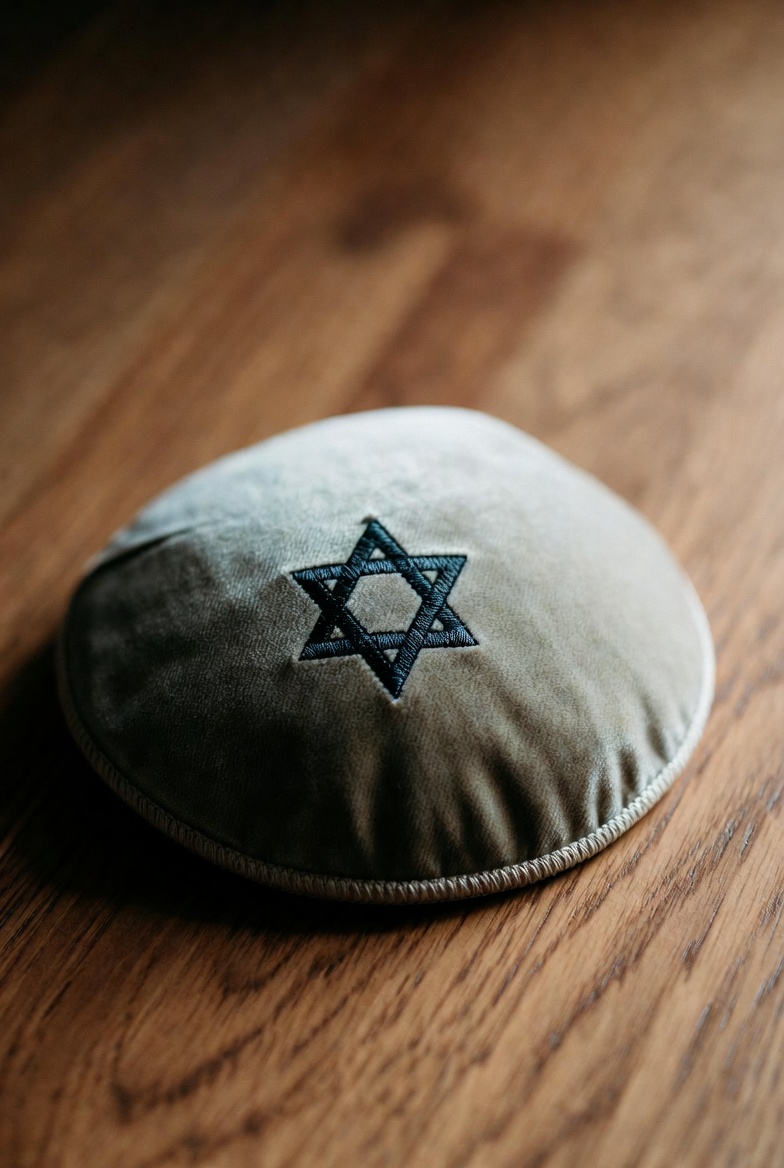
Introduction: The Strategic Imperative of Material Selection in Judaica Procurement
In the intricate ecosystem of Judaica procurement, the humble kippah—often viewed by the layperson as a simple religious staple—represents a complex convergence of theological tradition, textile engineering, supply chain logistics, and sociological signaling. For the professional buyer, whether a synagogue administrator charged with replenishing the communal bin, an event planner curating the aesthetic of a high-stakes wedding, or a retail store owner forecasting seasonal inventory, the selection of fabric is never merely a matter of color or pattern. It is a strategic decision that impacts budget efficiency, user comfort, photographic outcomes, and the subtle cultural codes that define Jewish communal life.
The contemporary marketplace is characterized by a “selection paralysis” driven by an explosion of material options. Where once the choice was a binary selection between the black satin of the traditional synagogue and the knitted white of the modern Israeli ethos, the current catalog includes high-performance synthetic suedes, organic linens, rustic burlaps, and complex raw silks. Each of these materials behaves differently under the stresses of climatic variation, mechanical wear, and cleaning protocols. A fabric that performs exceptionally well in the climate-controlled environment of a hotel ballroom may fail catastrophically in the humidity of an outdoor summer chupah, wilting into a shapeless, sweat-stained disappointment. Similarly, a material chosen for its low unit cost may prove economically disastrous if its lack of durability necessitates frequent replacement cycles in a synagogue setting.
This report serves as a definitive technical and market analysis for the B2B industry professional. It moves beyond superficial descriptions to analyze the molecular and structural properties of the four dominant fabric categories: Suede, Satin/Silk, Linen/Burlap, and Knit. By dissecting the manufacturing processes—from the chemical tanning of split leathers to the caustic mercerization of cotton yarns—we provide the granular insight required to make data-driven purchasing decisions. We examine the trade-offs between photogenicity and durability, the hidden costs of lining materials, and the supply chain dynamics that dictate pricing and lead times. This is not merely a guide to what looks good; it is a guide to what works, why it works, and how to maximize value in an industry where tradition meets textile science.
Section I: Suede – The Institutional Standard and the Science of Split Leathers
Suede remains the ubiquitous workhorse of the institutional kippah market, occupying a dominant position in the inventory of synagogues, schools, and yeshivas globally. Its prevalence is not accidental but the result of a specific functional profile: distinct frictional properties that adhere to the hair without clips, a matte finish that resists glare, and a price-to-durability ratio that appeals to budget committees. However, the generic label “suede” obscures a vast spectrum of material grades, ranging from premium bovine corium to mass-produced synthetic microfibers, each with distinct implications for the buyer.
The Anatomy of the Hide: Understanding Split Suede Grades
To understand the performance variability in suede kippahs, one must first understand the anatomy of the leather from which they are hewn. “Suede” in the context of mass-market Judaica is almost exclusively “split leather.” When a raw hide is processed, it is too thick for garment or accessory use. It is mechanically split into layers. The top layer, containing the dense, protective grain, is reserved for “full-grain” or “top-grain” leather goods. The remaining bottom layers—the fibrous corium—become the raw material for suede.1
This distinction is critical for durability. The corium is naturally more porous and less tensile than the grain. In the hierarchy of kippah manufacturing, suppliers utilize varying depths of this split, which directly correlates to the product’s “grade” and price point.
Premium Split Suede: The highest quality suede kippahs are sourced from the split closest to the grain. This layer maintains a tighter fiber structure, resulting in a short, velvety nap and, crucially, inherent structural rigidity.3 A kippah made from this grade holds its dome shape naturally. It feels substantial in the hand and resists tearing at the stitching points—a common failure mode in 4-panel constructions where tension is concentrated at the apex.4
Deep Split and Economy Grades: As one moves deeper into the hide, towards the flesh side, the fiber structure becomes looser and the tensile strength diminishes. Economy-grade suede is often “shaggy,” with a longer, less uniform nap that is prone to shedding. To compensate for the lack of structural integrity in these deep splits, manufacturers often employ a fusing process, bonding the suede to a non-woven backing or stiffener.5 This leads to a prevalent consumer complaint: the “paper-like” feel. When a user handles a cheap suede kippah, they often hear a crinkle or feel a cardboard-like rigidity. This is not the leather itself, but the artificial skeleton required to keep the flimsy suede from collapsing. For the B2B buyer, detecting this “fused” feel is a primary quality control check. While these units are cheaper, often falling into the sub-$3.00 bracket 6, they are perceived as lower value by end-users and are less comfortable, as the stiffener inhibits the leather’s natural ability to mold to the wearer’s head shape.
Synthetic Alternatives: The Rise of Ultra Suede: A significant portion of the “suede” market has transitioned to synthetic alternatives, often marketed as “Ultra Suede” or “Amara.” These are high-performance polyester microfibers designed to mimic the tactile properties of leather.5 From a procurement perspective, synthetics offer superior consistency. Natural hides are plagued by scarring, insect bites, and density variations that can lead to high rejection rates or inconsistent batches. Synthetic suede is uniform, allowing for precise automated cutting and reducing waste.
However, the tactile experience differs. Synthetic suede often possesses a “sticky” hand feel compared to the dry friction of real leather.5 It is also heavier than traditional fabrics like velvet, which gives it a premium drape but can trap heat.5 The primary advantage of synthetic suede lies in its maintenance profile, a factor of immense importance for institutional buyers managing shared inventory.
Structural Geometry: The Four-Panel Paradigm
The vast majority of suede kippahs utilize a 4-panel construction.8 This is not merely an aesthetic choice but a constraint dictated by the material’s properties. Unlike woven fabrics (satin, linen) which are thin and pliable, suede is dense. Gathering suede into the six separate segments required for a rounder, more anatomical dome would create bulky, unmanageable seams that would press uncomfortably against the scalp.
The 4-panel design creates a boxier, flatter profile that sits closer to the top of the head.9 This geometry relies heavily on the stiffness of the material to maintain its arc. If the suede grade is too low and lacks stiffness, the 4-panel structure collapses into a square-ish, deflated shape. Conversely, if heavily fused with stiffeners, it perches rigidly like a box. The “Sweet spot” for buyers is a suede that is pliable enough to curve but stiff enough to support its own weight—a balance usually found in mid-tier “Deluxe” suede lines.11
Durability, Maintenance, and the Hygiene Challenge
For the synagogue administrator, the calculation of value is inextricably linked to the replacement cycle. How long can a kippah survive in the “shul bin”? Suede excels in physical durability. It is resistant to tearing and, crucially, its textured surface hides the minor abrasions and scuffs that would render a satin kippah unsightly.4 Furthermore, the natural nap of suede acts as a friction anchor. It grips the hair effectively, often negating the need for clips.12 This is a significant cost-saving feature for institutions, as clips are frequently lost, bent, or stolen, representing a constant micro-cost in inventory management.
The Achilles’ heel of natural suede is hygiene. The porous corium is essentially a sponge for oils and sweat. Over time, the rim of a communal suede kippah will darken significantly as it absorbs skin oils.13 Unlike cotton or synthetic knits, natural suede is extremely difficult to clean. Water is an enemy to the tanning agents used in split leather; it causes the collagen fibers to stiffen and shrink upon drying, ruining the fit.13 Furthermore, many dyed suedes are not colorfast. A dark navy or black suede kippah exposed to rain or heavy perspiration can bleed dye onto the wearer’s forehead or expensive tallit, a liability that event planners must consider for outdoor summer events.14
This is where Synthetic Ultra Suede claims its market advantage. Being polyester-based, it is hydrophobic and colorfast. It can be wiped down or even gently hand-washed without losing its structural integrity or bleeding dye.15 For high-traffic institutions—hospital chapels, tourist-heavy synagogues, or outreach centers—the shift to high-quality synthetic suede is a strategic move to extend the sanitary lifespan of the inventory.
Customization and Pricing Dynamics
Suede serves as an ideal substrate for customization, particularly foil stamping and embossing. The uniform, matte surface of the leather (or microfiber) accepts heat-transfer foils (gold, silver) with high definition, making it the standard for Bar Mitzvah and wedding imprints.6 “Blind embossing”—stamping the design without foil/ink—creates a subtle, tone-on-tone effect that is popular for more understated or corporate events.16
In terms of pricing, suede occupies the mid-tier. It is generally more expensive than standard polyester satin but cheaper than complex knits or linen. Wholesale pricing is heavily volume-dependent. A standard order of 50-100 units typically lands in the $3.25–$4.00 per unit range.6 However, significant economies of scale kick in at higher volumes; orders exceeding 200 or 500 units can drive the price below $3.00 or even $2.50 per unit.6 This pricing structure incentivizes bulk procurement, encouraging synagogues to order “annual supplies” rather than ad-hoc replacements.
Section II: Satin and Silk – The Architecture of Formality and Sheen
If suede is the functional standard of the synagogue lobby, Satin and Silk are the undisputed champions of the lifecycle event. Dominating the wedding and Bar/Bat Mitzvah sectors, these fabrics are selected primarily for their aesthetic alignment with formal wear—suiting, gowns, and evening attire. However, for the B2B buyer, the category of “Satin” is fraught with ambiguity. It is imperative to distinguish between the fiber (what it is made of) and the weave (how it is constructed), as this distinction dictates both price and performance.
The Fiber Distinction: Polyester vs. Silk vs. Raw Silk
In the mass-market bulk kippah trade, the word “satin” almost invariably refers to Polyester Satin. This material is engineered for uniformity, durability, and cost-efficiency. Polyester fibers are extruded to be perfectly smooth, and when woven in a satin weave (characterized by four or more fill yarns floating over a warp yarn), they create a high-gloss, reflective surface.18
- Polyester Satin: This is the industry default for weddings. It is highly resistant to wrinkling, holds deep, saturated colors without fading, and is relatively inexpensive.19 However, from a comfort perspective, it is suboptimal. Polyester is hydrophobic and non-breathable. A tightly woven polyester satin kippah acts as a heat trap on the crown of the head. In warm environments or during vigorous dancing, this can lead to significant discomfort and perspiration buildup.20
- Silk Satin: True silk satin represents a significant step up in luxury and price. Silk fibers have a triangular prism-like structure that refracts light, giving the fabric a pearlescent, soft glow rather than the harsh, “plastic” shine of polyester.20 Silk is protein-based and naturally breathable, offering superior thermal regulation. However, it is fragile. Silk satin snags easily on rough skin or hair clips, and it is highly susceptible to water spotting; a drop of sweat or rain can leave a permanent ring on the fabric.
- Raw Silk (Silk Noil): A distinct and increasingly popular category, raw silk offers the prestige of the fiber without the high gloss. Made from the shorter fibers left over from spinning, it has a nubby, matte texture similar to cotton or wool but with a distinctive “dry” hand.23 Raw silk kippahs bridge the gap between formal and rustic. They do not reflect flash photography glare like satin, making them a favorite of wedding photographers, yet they retain a formal structure.23
The Hidden Engineering: Lining Quality
In suede kippahs, the material itself provides the structure. in satin and silk kippahs, the fabric is fluid and limp; the structure is entirely dependent on the lining. A satin kippah is essentially a composite object, where the outer shell provides the look and the inner lining provides the mechanics.
Cotton Lining: This is the mark of a high-quality satin kippah. Cotton lining serves two critical functions. First, it absorbs perspiration, mitigating the “clammy” feel of the polyester shell.25 Second, cotton has texture. It provides the necessary friction against the hair to help the slippery satin shell stay in place. A satin kippah with a polyester lining is a “double slip” mechanism—slippery inside and out—guaranteeing that it will slide off the head without heavy clipping.26
Polyester/Nylon Lining: Found in budget options, this lining is durable and cheap but exacerbates the heat and slip issues. It creates a barrier that is impermeable to air and moisture, often leading to complaints of sweating.27
The “Deluxe” Innovation: A specific feature differentiating “Deluxe” satin kippahs in B2B catalogs is the inclusion of a hidden eyelet or buttonhole within the lining.23 Standard kippahs require the user to jam a metal clip through the fabric or over the rim, which disrupts the clean lines of the item. The hidden eyelet allows the clip to be inserted internally, engaging the hair while remaining invisible from the outside. For high-end event planners, this detail is a significant selling point, offering a cleaner aesthetic for the wedding party.
Photographic Considerations for Event Planners
A crucial, often overlooked factor in fabric selection is photogenicity. In the era of high-definition wedding photography, the interaction of fabric with flash lighting is paramount.
- The Glare Problem: High-gloss polyester satin is highly reflective. Direct flash can create “hot spots” or specular highlights on the kippah, blowing out the color and detail in photos. A white satin kippah can disappear into a glowing orb, while a black one can look like a shiny plastic disc.29
- The Matte Advantage: This drives the recommendation for Raw Silk or Matte Finish fabrics for the immediate wedding party. These textures absorb light, rendering rich, accurate colors and visible texture in photos without glare. Suede also performs well here, but may be considered too casual for black-tie affairs.
Section III: Linen and Burlap – The Naturalist Shift and Rustic Modernity
The last decade has witnessed a decisive aesthetic shift in the wedding and event industry, moving away from the polished “hotel ballroom” look toward “rustic chic,” “boho,” and outdoor venues. This trend has catalyzed the rise of textured, natural fibers in the kippah market, specifically Linen and Burlap. For the B2B buyer, these fabrics represent a modernization of the product, repositioning the kippah from a traditional religious artifact to a stylish, integrated fashion accessory.29
Linen: The Climate-Adaptive Champion
Linen is the unrivaled technical champion for warm-weather events. Derived from the flax plant, linen fibers are hollow, allowing for maximum airflow and rapid moisture transport (wicking).31 Unlike cotton, which absorbs moisture and holds it (becoming heavy and damp), linen releases moisture quickly to the atmosphere, creating a cooling effect through evaporation.
For an outdoor chupah in August—whether in Florida, New York, or Jerusalem—linen is the only logical recommendation. It prevents heat buildup and remains comfortable even in high humidity.29 Furthermore, linen has a natural stiffness (pectin) that allows it to hold a crisp, tailored shape without the need for heavy, heat-trapping stiffeners or fusible backings.
The Wrinkle Trade-Off: The primary drawback of linen is its low elasticity and propensity to wrinkle. In a bulk shipment, linen kippahs can arrive looking crushed. However, because the kippah is constructed under tension (the domed shape pulls the fabric taut), these wrinkles are often less visible than on a flat garment. High-quality linen kippahs often utilize a “linen-cotton” or “linen-rayon” blend to mitigate this, retaining the linen aesthetic while improving wrinkle resistance and softness.31
Aesthetics: Linen takes dye differently than protein (silk/wool) or synthetic fibers. It has a lower dye affinity, resulting in colors that are naturally muted, pastel, or “earthy.” This aligns perfectly with contemporary wedding palettes that favor soft neutrals, sage greens, and dusty blues, as opposed to the electric, saturated royal blues of traditional polyester satin.32
Burlap: The Rustic Aesthetic vs. The Comfort Reality
Burlap (jute) represents the extreme end of the rustic spectrum. Its coarse, open weave and fibrous texture make it the perfect complement to barn weddings, floral centerpieces, and “farm-to-table” event themes.34 However, burlap presents significant challenges in terms of comfort and manufacturing.
The Lining Necessity: Raw burlap is extremely rough, scratchy, and prone to shedding particulate matter. It is essentially an industrial packaging material adapted for apparel. Therefore, the lining of a burlap kippah is not just structural—it is a biological safety barrier. A high-quality burlap kippah must feature a tightly woven, soft cotton twill lining to protect the wearer’s scalp from irritation.35 Buyers must be vigilant against unlined or cheaply lined burlap options, which will inevitably generate user complaints.
The Binding Factor: Burlap ravels easily. The cut edges of the 4-panel or 6-panel construction are prone to disintegration. The quality of a burlap kippah is often determined by its “rim” or binding. A secure, double-stitched cotton or linen binding is essential to seal the raw edges of the jute and prevent the kippah from falling apart after minimal handling.34
Section IV: Knit (Srugim) – The Complexity of Yarn, Gauge, and Cultural Coding
The knitted kippah (kippah serugah) stands apart from the other categories. It is not cut and sewn from a bolt of fabric; it is constructed, stitch by stitch, from yarn. This fundamental difference introduces a unique set of quality metrics—yarn composition, mercerization, and gauge—and carries a heavier weight of sociological coding than any other style.
Yarn Chemistry: The “DMC” Standard and Mercerization
In the lexicon of knit kippahs, the acronym “DMC” is frequently used as a shorthand for quality.12 While DMC (Dollfus-Mieg & Compagnie) is a specific French textile brand, in the Judaica market, “DMC style” refers generically to Mercerized Cotton.
The Mercerization Process: Standard cotton fiber is a flat, twisted ribbon. It is soft but matte and relatively weak. Mercerization is a chemical treatment where the cotton yarn is submerged in a sodium hydroxide (caustic soda) solution under tension.38 This process causes the fiber walls to swell and become rounder and smoother. The result is a yarn with:
- Increased Luster: The smooth surface reflects light, giving the kippah a subtle, silk-like sheen.
- Increased Strength: The structural change makes the yarn more resistant to breaking.
- Enhanced Dye Affinity: Mercerized cotton holds deeper, more vibrant colors that are less prone to fading.
A high-quality “DMC” kippah feels crisp, firm, and looks polished. In contrast, cheaper knit kippahs use un-mercerized cotton or acrylic blends. These feel soft, fuzzy, and matte. They are prone to pilling (forming small fuzzballs) and can look worn and “ragged” very quickly.40
Gauge Mechanics: Stitches Per Inch
The structural integrity of a knit kippah is defined by its gauge—the number of stitches per inch.41
- Fine Gauge: High-quality Srugim are knit with fine thread (comparable to size 10 or 20 crochet thread) and small needles/hooks. This creates a dense, tight fabric with a high stitch count. The density allows the kippah to hold a domed shape naturally, perching on the head with defined structure.40
- Coarse/Loose Gauge: Cheaper or more casual knits use thicker yarn and fewer stitches per inch. These result in a floppier, softer fabric that conforms to the head like a beanie rather than holding a shape. While comfortable, they lack the formality of the fine-gauge knit and are more prone to stretching out over time.40
Sociological Signaling: The Code of the Knit
Unlike suede or satin, which are relatively neutral canvas, the knit kippah is a billboard of identity. It is the primary identifier of the Modern Orthodox and Religious Zionist (Dati Leumi) communities.29
- Black Knit (Fine Gauge): Often signifies a bridge between the Modern Orthodox and the Yeshivish/Haredi worlds. It is popular among “Centrist Orthodox” men or those in academic settings who wish to signal observance without the specific cultural baggage of the black velvet (Haredi) or the colorful knit (Zionist).29
- Colorful/Patterned: Strongly identified with the Religious Zionist youth movements (such as Bnei Akiva) and modern Israeli culture. The specific patterns often denote affiliation with different sub-groups or settlements.
- Size Matters: The diameter of the knit kippah is also a coded signal. A larger kippah that covers most of the head is often associated with more intense religious commitment or specific settlement movements (the “hilltop youth” aesthetic). Smaller, “bottle cap” sized knits are often associated with modern, sometimes less strictly observant, leanings.29
B2B Implication: For the general buyer (e.g., a synagogue stocking a bin), a generic knit is risky. It is too culturally specific. However, for a Bar Mitzvah family belonging to one of these specific communities, getting the wrong type of knit (e.g., wrong size, wrong gauge, wrong pattern style) is a significant faux pas. Buyers must intimately understand the specific “minhag ha-makom” (custom of the place) before investing in bulk knits.
Washing and Care
Knit kippahs have a distinct advantage in maintenance: they are generally washable. However, the method matters. Machine washing can cause shrinkage, especially in cotton, and the agitation can cause the knit to lose its shape or unravel if not tightly finished. Hand washing in cool water with a reshape-and-air-dry protocol is the standard recommendation.45 This washability makes them popular for personal daily wear, even if their cost and cultural specificity make them less ideal for communal bins.
Section V: Comparative Analysis – The Buyer’s Decision Matrix
To navigate the complex trade-offs between cost, durability, and aesthetics, the following matrix provides a direct comparison of the four primary fabric categories across key B2B metrics.
| Feature | Suede (Classic) | Satin/Silk (Formal) | Linen/Burlap (Modern) | Knit (Srugim) |
| Primary Use Case | Synagogue Bins, Schools, Daily Wear | Weddings, Bar/Bat Mitzvahs | Summer Weddings, Rustic Events | Modern Orthodox Daily Wear |
| Durability | High (Tear resistant, durable surface) | Medium (Prone to snagging/pilling) | High (Strong fibers, resists tearing) | Variable (Prone to unraveling/stretching) |
| Maintenance | Difficult (Stains, water damage) | Medium (Dry clean/Spot clean) | Easy (Washable, though wrinkles) | Easy (Hand wash/Air dry) |
| Breathability | Low (Real Leather) / Medium (Synthetic) | Low (Polyester) / High (Silk) | Very High (Hollow fiber structure) | High (Open weave/porous) |
| Formality | Neutral (Business Casual equivalent) | High (Black Tie equivalent) | Smart Casual (Garden Party) | Religious/Cultural Specific |
| Price Tier (Bulk) | Mid-Range ($3.00 – $4.00) | Low-Mid ($2.00 – $3.50) | Mid-High ($3.50 – $5.00+) | Wide Range ($5.00 – $15.00+) |
| Customization | Excellent (Foil Stamping/Embossing) | Excellent (Screen Print/Lining Print) | Good (Embroidery) | Limited (Pattern woven in) |
| Clip Necessity | Low (High friction grip) | High (Slippery fabric) | Medium (Dependent on fit) | High (Usually requires clips) |
| Photogenicity | Good (Matte, no glare) | Poor (High glare/flash reflection) | Excellent (Matte, textured) | Good (Matte, textured) |
Table 1: Comparative Fabric Matrix (Data synthesized from 6)
Strategic Recommendations by Persona
For the Synagogue Administrator: The data points unequivocally to Synthetic Ultra Suede in dark colors (Navy, Grey, Black). It offers the durability of leather without the hygiene liabilities. It resists water spotting, can be wiped clean, and its high-friction surface minimizes the need for clips, reducing accessory costs. It is the “Toyota Camry” of kippahs: reliable, ubiquitous, and low-maintenance.
For the Wedding Planner: The trend analysis favors Linen and Raw Silk. These fabrics solve the two biggest complaints of wedding parties: overheating and bad photos. They offer a sophisticated, matte finish that interacts beautifully with flash photography and provides superior thermal regulation for the wearer. For budget-conscious events, Matte Satin or Deluxe Satin (with hidden eyelets) are the superior alternatives to standard shiny polyester.
For the Retailer: Diversity is key. While Suede and Satin are volume sellers, stocking Knit (in various gauges) and Linen captures the specific demographic segments (Modern Orthodox and Fashion-Forward) that are less price-sensitive and more quality-focused.
Section VI: Logistics, Supply Chain, and the Economics of Customization
The transition from commodity to custom product creates value but introduces logistical friction. Understanding the supply chain mechanics is crucial for managing client expectations and margins.
The Customization Spectrum
- Foil Stamping & Embossing: This is the standard for Suede. The uniform surface of the leather (especially synthetic) accepts heat-transfer foil (Gold/Silver) with crisp definition. “Blind embossing” (stamping without ink/foil) utilizes the compressibility of the suede to create a 3D relief effect, a premium look often available for the same price or a nominal setup fee.16
- Screen Printing: The go-to for Satin linings. It is fast and inexpensive but has low durability. The ink sits on top of the fabric and can rub off with friction and sweat over time.
- Embroidery: The premium option, essential for Knit (where printing is impossible) and increasingly popular on Linen and high-end Suede. Embroidery adds texture and perceived value. It is physically stitched into the fabric, making it permanent. However, it significantly increases production time (as each unit must be hooped and stitched) and cost.48
- Digital Lining Printing: A rapidly emerging trend in Satin and Linen kippahs is the ability to digitally print the entire lining with a pattern or photograph, rather than just text. This transforms the interior of the kippah into a hidden canvas for branding or personalization, allowing for full-color logos or thematic designs that are invisible when worn but delightful when held.33
Supply Chain Dynamics: Lead Times and Freight
The vast majority of bulk kippah manufacturing is centralized in China and Israel. This geographic concentration dictates the logistical reality.
- Standard Lead Times: Custom fabric orders typically require 4-6 weeks for production. This accounts for the sourcing of specific fabric colors, the cutting/sewing cycle, and personalization.50
- Rush Options: “Rush” orders (often defined as under 3 weeks) are possible but problematic. They usually incur significant fees ($60+) and, more importantly, limit customization. Rush orders are often fulfilled from domestic (US/local) stock, meaning the buyer is limited to “what’s on the shelf” (usually basic black or white satin/suede) rather than the full spectrum of custom fabrics.50
- Freight Economics: Shipping is a major cost driver. Large bulk orders (1,000+ units) can be shipped via ocean freight, drastically reducing per-unit shipping costs but extending lead times to 75-90 days. Air freight is the standard for smaller batches (under 500) but adds significantly to the landed cost.51
Pricing Structures and Tiered Breaks
Suppliers utilize tiered pricing models to encourage volume. Smart buyers should be aware of the “cliffs” in these structures.
- The Minimum: Most suppliers enforce a minimum order quantity (MOQ) of 50 or 60 units. Below this, per-unit prices are inflated with “small order fees”.5
- The Sweet Spot: A significant price break often occurs at the 100-unit or 144-unit (gross) mark. Pricing can drop by 15-20% at this tier compared to the 50-unit tier.6
- Volume Discounts: For institutional orders, hitting the 500-unit tier can unlock further discounts (e.g., 10%), making it economically rational for a synagogue to order a year’s supply at once rather than two smaller orders six months apart.17
Conclusion
The selection of a kippah fabric is a decision that ripples through the entire lifecycle of the product. It affects the budget of the purchasing committee, the comfort of the wearer during a three-hour service, the quality of the photographs that will be cherished for decades, and the logistical efficiency of the institution maintaining the inventory.
By understanding the distinct properties of the materials—the grip of suede, the breathability of linen, the formality of satin, and the cultural resonance of the knit—B2B buyers can move past “selection paralysis.” They can confidently recommend the right fabric for the right context, transforming a simple commodity into a thoughtful, functional, and meaningful element of Jewish life. Whether the goal is the rugged durability required for a yeshiva dormitory or the ethereal elegance demanded by a summer wedding, the science of the fabric holds the answer.